
PLANTAR WARTS
Plantar Warts — Podiatry Care in Knoxville, TN
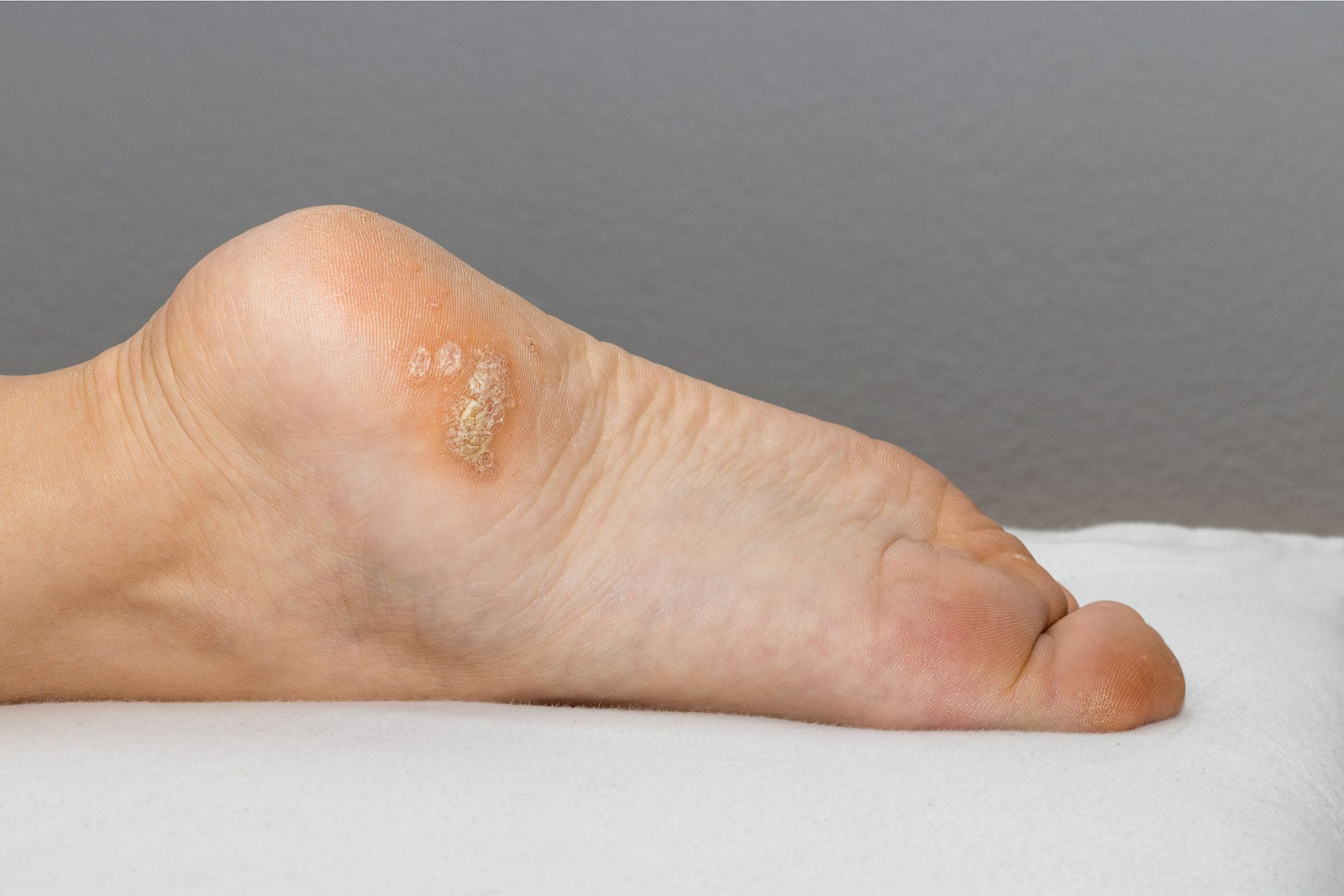
A plantar wart is a viral infection of the top layer of skin on the sole of the foot. Because you walk on it, the wart grows inward under pressure and can become genuinely painful — like standing on a small stone. They are common, they are contagious, and they are one of the most stubborn things in podiatry to clear.
A plantar wart is caused by a virus in the outer layer of skin. On the sole it gets pressed inward as you walk, which is why it hurts and why it is harder to treat than a wart elsewhere. Over-the-counter acids clear some of them; the ones that come back, spread, or hurt to stand on are worth having looked at.
Common signs
- A thickened, callused spot on the sole that hurts with pressure
- Tiny black dots within the lesion (small clotted capillaries)
- Pain when squeezing the lesion side to side, rather than pressing straight down
- One wart that has become several, spreading across the sole
What usually helps
- In-office debridement to remove the overlying callus
- Topical or acid treatments applied at clinical strength
- Cryotherapy or other in-office procedures
- Offloading padding so it is not being pressed with every step
Wart on the sole that keeps coming back? Tell us how long it has been there and we will talk through the options.
What a plantar wart is
Plantar warts are caused by human papillomavirus entering the outer layer of skin, usually through a small break. They thrive in warm, damp environments — pool decks, locker rooms, communal showers — and they spread both to other parts of your own foot and to other people. On the sole, body weight pushes the wart inward rather than letting it grow outward, which is why it forms a hard callused surface and why it can be painful to stand on.
How to tell a wart from a callus
They look similar and are regularly confused. Two useful differences: a wart usually contains tiny black dots, which are small clotted blood vessels feeding it, and a wart typically hurts more when pinched side to side than when pressed straight down, while a callus is the reverse. A wart also interrupts the normal skin lines of the sole, where a callus keeps them running through. Getting this right matters, because they are treated completely differently.
Mosaic and recurrent warts
When several warts cluster and merge into a patch, it is called a mosaic wart. These are harder to clear than a single lesion because the virus is spread across a wider area. Recurrence is also common — a wart that appears to have gone can return weeks or months later from virus remaining in surrounding skin. That is not a failure of treatment so much as a feature of the virus.
How plantar warts are treated
Treatment is staged, and it usually takes more than one visit:
- Debridement — paring back the thickened skin over the wart so treatment can actually reach it. This alone often reduces the pain of walking.
- Clinical-strength topical treatment — stronger and more precisely applied than over-the-counter preparations.
- Cryotherapy — freezing the lesion, generally over a course of visits.
- Offloading padding — so the wart is not being ground down with every step while it resolves.
- Minor in-office procedures for lesions that do not respond.
Most plantar warts need a course of treatment rather than a single visit, and being told that honestly up front is better than being surprised by it.
Warts on a diabetic foot — why they get left alone
A plantar wart on a diabetic foot is a different problem, and it is one many clinicians are reluctant to treat aggressively. The standard tools are destructive — acids burn tissue, cryotherapy freezes it, excision cuts it. On a foot with reduced circulation, impaired healing, or neuropathy that masks pain, each of those carries a real risk of creating a wound that will not close. A wart is a nuisance; a non-healing diabetic foot wound is not.
So the wart is frequently monitored rather than treated, sometimes for years, while it grows, spreads, or becomes painful enough to change how the patient walks — which brings its own problems on a foot that already needs protecting.
This is where Low-Dose Radiation Therapy is worth knowing about. It is non-destructive: there is no incision, no burn, and no open wound created in the treating. That is precisely why it can be an option in a patient for whom the conventional treatments are the thing to avoid. Our sister clinic offers LDRT for persistent benign skin conditions including warts. Whether it is right for a given patient is decided at a consultation — but for a diabetic foot wart that everyone has been reluctant to touch, it is a conversation worth having rather than continuing to watch and wait.
When a wart will not clear
Some plantar warts resist everything reasonable — acids, freezing, repeated debridement — and keep coming back over months or years. Others are so painful, or so widespread across the sole, that they are genuinely limiting how much you can walk.
At that point there is another option worth understanding. Our sister clinic offers Low-Dose Radiation Therapy (LDRT) for persistent benign skin conditions including stubborn warts. It is non-surgical, it is used when conventional treatment has genuinely been exhausted, and it is not appropriate for everyone. Whether it fits your situation is decided at a consultation.
What happens at your first visit
We confirm the lesion is a wart and not a callus, corn, or something else, debride the overlying skin so we can see what we are dealing with, and start treatment the same visit where appropriate. You leave knowing what it is, what the plan is, and roughly how many visits to expect.
How long it takes
Straightforward warts often clear over several weeks of staged treatment. Mosaic and long-standing warts take longer and recur more often. Anyone promising a single-visit cure for a stubborn plantar wart is overselling it.
Contact us to schedule an evaluation.